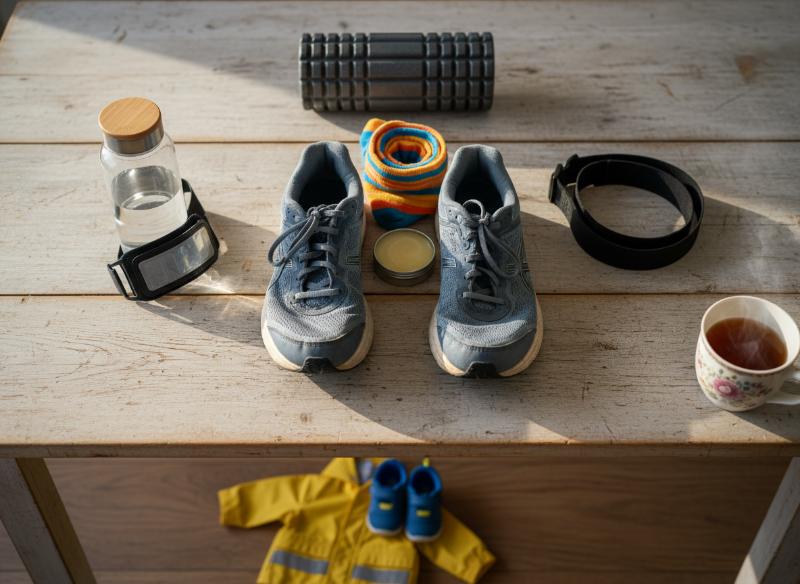

When I first started running, I assumed I needed loads of fancy kit to feel like a “real runner”. In reality, the biggest difference came from a handful of basics that made running more comfortable, safer, and easier to stick with.
These days, I’m juggling running with family life (Steve, my very patient husband, and our energetic 3.5 year old daughter), so I’m all about essentials that genuinely earn their place in the house. If something makes getting out the door simpler, reduces niggles, or helps me feel more confident on a run, it’s a keeper. If it’s just another gadget that clutters a drawer, it’s not.
This post is a practical, beginner-friendly list of what I think is worth having — plus a few things that are nice-to-haves if you enjoy them.
A quick note before we start
You don’t need to buy everything at once. If you’re brand new to running, I’d start with:
- Comfortable trainers you can walk in (you don’t need the most expensive pair)
- A couple of decent pairs of socks
- Something reflective if you run in low light
Then add things as you go, based on what you actually need.
1) Running shoes that feel good (not just look good)
Let’s get the obvious one out of the way: shoes matter. But I’m going to say something that might be reassuring — you don’t have to get it perfect on day one.
What you do want is a pair of trainers that:
- Feel comfortable straight away (no “breaking in” pain)
- Have enough room in the toe box (toes shouldn’t feel squashed)
- Don’t slip at the heel
- Feel stable when you walk and jog
If you can, try shoes on later in the day when your feet are slightly more swollen (very normal), and wear the socks you’ll run in.
If you’d like a solid beginner plan that includes walk-run intervals, I’ve always found the NHS Couch to 5K programme a really approachable way to start.
2) Proper running socks (the most underrated essential)
If you only upgrade one thing after shoes, make it socks.
Regular cotton socks tend to hold onto sweat, which can lead to rubbing and blisters. Running socks are usually made from technical fabrics that wick moisture away and reduce friction.
What I look for:
- Snug fit (not tight, but no bunching)
- Seamless or low-seam toe area
- A bit of cushioning under the heel and ball of the foot
This is one of those purchases that feels boring until you do a run without hot spots and realise you’ve been suffering unnecessarily.
3) A simple anti-chafe product
Chafing is one of those things nobody talks about until it happens to them. And then you never forget.
If you’re running more than 20–30 minutes, or it’s warm, or you’re wearing new kit, an anti-chafe balm can make a huge difference. I keep mine with my running stuff so I don’t forget.
Common chafe zones include:
- Underarms
- Bra line
- Inner thighs
- Waistband area
It’s not glamorous, but it’s very real.
4) A supportive sports bra (if you wear one)
This is less about “performance” and more about comfort. A supportive sports bra can make running feel immediately more doable.
My personal tip: if you can, have one that’s comfortable enough to wear for a while afterwards too — because sometimes I’m doing the nursery run straight after, and I don’t always have time to change.
5) Something reflective (especially in the UK)
If you run in autumn or winter in the UK, you’ll almost certainly be out in low light at some point. Visibility is a safety essential.
Easy options:
- Reflective armband
- Reflective running vest
- Clip-on light
I’m not trying to be dramatic, but being seen is one of the most important “upgrades” you can make.
6) A running belt (or pocket solution)
When I started running, I tried to hold my phone and keys, and it was instantly annoying. A running belt (or leggings with a secure pocket) is one of those small things that reduces friction — not on your skin, but in your brain.
A belt is handy for:
- Phone
- Keys
- A card or a bit of cash
- A tissue (if you know, you know)
If I’m running while Steve’s at home with our daughter, I like having my phone on me for peace of mind.
7) Hydration basics: do you need a bottle?
This depends on your run length and the weather.
- For short runs (say 20–40 minutes), you may not need to carry water.
- For longer runs, hot days, or if you’re prone to headaches, having water can help.
A reusable bottle is a good household staple anyway, and it’s useful for walks, days out, and the endless “Mummy, I’m thirsty” moments too.
8) A warm-up routine you’ll actually do
This is my “free essential”. It doesn’t cost anything, but it can make a big difference to how your run feels.
My realistic warm-up (takes 3–5 minutes):
- Brisk walk
- Ankle circles
- 10 calf raises
- A few leg swings (holding onto a wall if needed)
- Start running slowly
When I skip this, I feel stiffer and more likely to get niggles.
If you want a reputable guide to warm-ups and running-related strength work, the Chartered Society of Physiotherapy has helpful resources: https://www.csp.org.uk/public-patient
9) Recovery tools that aren’t overkill
You don’t need a full home gym. But a couple of simple tools can help you feel less achy and keep running consistently.
Foam roller
Great for calves, quads, and glutes. I use it while watching something mindless in the evening — sometimes with my daughter climbing on me like I’m a piece of playground equipment.
Massage ball (or tennis ball)
Brilliant for feet and tight spots in the glutes/hips.
Basic stretching habit
Even 5 minutes after a run helps. I’m not perfect at this, but I’m better than I used to be.
10) “Injury prevention” essentials: the unsexy stuff
This is where running becomes more sustainable.
Strength training (light and consistent)
Two short sessions a week can help a lot. Think:
- Squats (bodyweight)
- Glute bridges
- Calf raises
- Side steps with a band
- Planks
I’ll often do a mini session while dinner is cooking, or while Steve plays with our daughter.
Sleep and rest days
Not a product, but absolutely essential. If you’re tired and run-down, everything feels harder.
11) A comfort/support add-on: shoe inserts
If your trainers are generally fine but you want a bit more comfort or support, shoe inserts can be a useful option to try.
I like the idea of adjusting how a shoe feels without immediately replacing the whole pair — especially if you’re a beginner and still figuring out what works for your feet. If you want to explore that option, here are shoe inserts you can look at:
(As always, if something makes pain worse, stop using it and consider getting professional advice.)
12) Nice-to-haves (only if they genuinely motivate you)
These aren’t essentials, but they can make running more enjoyable.
A simple running watch (or just your phone)
Tracking can be motivating, but it can also become a distraction. If you’re prone to comparing yourself, you might prefer to keep it simple.
Headphones
If you run somewhere safe and you can still hear what’s going on around you, music or podcasts can make runs feel easier.
A rain jacket you don’t hate
Because… the UK. If you’re comfortable in the rain, you’ll run more consistently.
What I’d buy first (if I was starting again)
If I was building my beginner running kit from scratch, I’d prioritise:
- Comfortable trainers
- Two pairs of running socks
- Something reflective
- A way to carry keys/phone (belt or pocket leggings)
- Anti-chafe balm
Then I’d add recovery tools and extras based on what my body and routine needed.
Final thoughts
Running doesn’t have to be complicated. The right essentials make it easier to start, easier to keep going, and honestly, easier to enjoy.
If you’re just beginning, be kind to yourself. Consistency matters far more than speed, and tiny improvements add up. And if you’re fitting running around family life like I am, remember that a “proper run” doesn’t have to look a certain way — sometimes it’s 20 minutes squeezed in while Steve holds the fort at home, and that still counts.
If you have a favourite beginner running essential I’ve missed, let me know — I’m always up for a genuinely useful recommendation.


