
Running a business from home for over a decade has taught me the importance of efficiency and cost-effectiveness in every aspect of operations. Whilst my work within digital marketing might not involve industrial manufacturing, I’ve become fascinated by how simple solutions can dramatically improve business operations. Recently, whilst researching content about sustainable business practices, I discovered the remarkable impact that PVC products—particularly strip curtains and rapid roll doors—can have on business efficiency and energy costs.
Companies like Rayflex have been pioneering innovative PVC solutions that address real business challenges, from temperature control and energy savings to hygiene maintenance and workspace organisation. As someone who’s always looking for ways to optimise productivity (especially important when juggling work calls whilst our two-year-old daughter plays nearby), I’ve been impressed by how these seemingly simple products can transform business operations.
The Hidden Costs of Poor Insulation
One of the most significant benefits of PVC strip curtains and rapid roll doors is their ability to maintain temperature zones within business premises. This became particularly relevant to me when Steve and I were discussing the heating costs of his workplace during the recent energy price increases that have affected so many UK businesses.
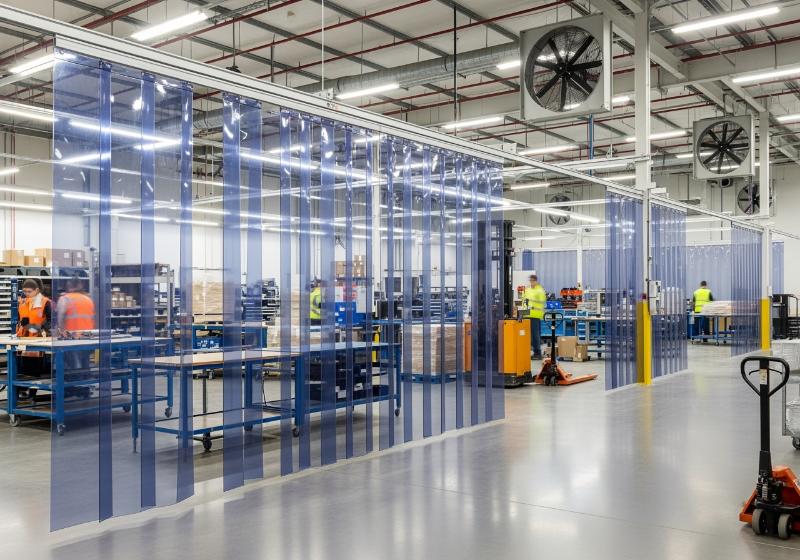
In manufacturing environments, warehouses, and food production facilities, maintaining consistent temperatures isn’t just about comfort—it’s about product quality, employee productivity, and substantial energy savings. PVC strip curtains create effective barriers that prevent heated or cooled air from escaping whilst still allowing easy access for staff and equipment.
Consider a cold storage facility where temperatures must remain consistently low. Every time a traditional door opens, cold air escapes and warm air enters, forcing refrigeration systems to work harder. PVC strip curtains allow forklifts and staff to pass through easily whilst minimising air exchange, potentially reducing energy costs by up to 30%.
Similarly, in heated workshops or manufacturing areas, these barriers prevent warm air from escaping to unheated sections of the building. The energy savings can be substantial—something that resonates with me as someone who’s become increasingly conscious of both environmental impact and rising utility costs since becoming a parent.
Dust Control and Air Quality Management
Working from home with pets (we have three Labradors, three cats, and two corn snakes), I’m acutely aware of how quickly dust and airborne particles can accumulate. In industrial settings, dust control isn’t just about cleanliness—it’s about equipment longevity, product quality, and employee health.
Industrial PVC barriers create effective dust containment zones, preventing particles from spreading between different areas of a facility. This is particularly crucial in industries like woodworking, metalworking, or pharmaceutical manufacturing, where cross-contamination can be costly or even dangerous.
I’ve read case studies of furniture manufacturers who’ve reduced their cleaning costs by over 40% simply by installing PVC strip curtains to contain sawdust and wood particles. The barriers also protect sensitive equipment from dust accumulation, reducing maintenance requirements and extending machinery lifespan.
Noise Reduction and Workspace Segmentation
Anyone who’s tried to work from home with a toddler will appreciate the value of noise control! In business environments, excessive noise can impact productivity, employee wellbeing, and even regulatory compliance. PVC solutions offer an effective way to manage sound transmission between different work areas.
Sound-dampening PVC curtains can reduce noise levels by up to 15 decibels, creating more comfortable working environments without the expense of permanent wall construction. This flexibility is particularly valuable for businesses that need to reconfigure their spaces regularly or operate in rented premises where permanent modifications aren’t feasible.
Manufacturing facilities often use these barriers to isolate noisy machinery from office areas or customer-facing spaces. The result is improved concentration for office workers and a more professional environment for client meetings—something I can certainly relate to when trying to maintain professional phone calls whilst our daughter’s playing in the next room!
Hygiene and Food Safety Applications
As someone who’s passionate about veganism and food quality, I’ve become increasingly interested in how businesses maintain hygiene standards in food production. PVC products play a crucial role in creating cleanroom environments and maintaining food safety standards.
The smooth, non-porous surface of quality PVC makes it incredibly easy to clean and sanitise. Unlike fabric alternatives, PVC doesn’t harbour bacteria or absorb odours, making it ideal for food processing environments where hygiene is paramount.
Food-grade PVC strip curtains allow easy access between different processing areas whilst maintaining separation between raw and cooked products, preventing cross-contamination. They’re also transparent, allowing supervisors to monitor operations without compromising the barrier’s effectiveness.
In pharmaceutical manufacturing, similar principles apply. Clean rooms require precise environmental control, and PVC barriers help maintain sterile conditions whilst allowing necessary access for staff and equipment.
Flexibility and Cost-Effectiveness
One aspect of PVC solutions that particularly appeals to me as a business owner is their flexibility. Unlike permanent walls or expensive automatic doors, PVC barriers can be easily relocated, resized, or reconfigured as business needs change.
This adaptability is invaluable for growing businesses or those with seasonal variations. A warehouse might need different configurations during peak periods, or a manufacturer might want to trial new workflow arrangements without major construction costs.
Modular PVC systems can be installed quickly with minimal disruption to operations—something crucial for businesses that can’t afford extended downtime. The installation process is typically much faster and less expensive than traditional construction alternatives.
Durability and Low Maintenance
Having managed various business operations over the years, I’ve learned to value solutions that require minimal ongoing maintenance. Quality PVC products are remarkably durable, often lasting years with minimal care beyond regular cleaning.
Unlike metal doors that can rust or wooden barriers that might warp, PVC maintains its properties in various environmental conditions. It’s resistant to chemicals, moisture, and temperature fluctuations, making it suitable for challenging industrial environments.
The low maintenance requirements translate to reduced operational costs over time. There are no complex mechanisms to service, no painting or refinishing requirements, and replacement parts are typically inexpensive and easy to install.
Environmental Benefits
As parents, Steve and I are increasingly conscious of our environmental impact and the world we’re leaving for our daughter. Modern PVC products offer several environmental advantages that align with sustainable business practices.
The energy savings achieved through better temperature control directly reduce carbon emissions. Additionally, the durability of quality PVC products means less frequent replacement, reducing waste over time.
Many eco-friendly PVC options are now available, including recycled content products and systems designed for end-of-life recyclability. This allows businesses to improve their environmental credentials whilst achieving operational benefits.
Return on Investment
Perhaps the most compelling aspect of PVC business solutions is their impressive return on investment. The combination of energy savings, reduced maintenance costs, improved productivity, and enhanced product quality often means these systems pay for themselves within months rather than years.
I’ve seen case studies of businesses achieving payback periods of 6-18 months through energy savings alone, with additional benefits from improved air quality, noise reduction, and operational efficiency, providing ongoing value.
For small and medium-sized businesses particularly, this rapid return on investment makes PVC solutions an attractive alternative to more expensive permanent modifications or complex automated systems.
Implementation Considerations
When considering PVC solutions for business applications, it’s important to work with experienced suppliers who understand the specific requirements of different industries. Factors like strip width, overlap configuration, mounting systems, and material grades all impact performance.
Professional assessment ensures the right solution for each application, maximising benefits whilst avoiding common pitfalls. Many suppliers offer site surveys and customised recommendations, helping businesses achieve optimal results from their investment.
The versatility and effectiveness of PVC strip curtains and rapid roll doors make them valuable additions to almost any business operation. From the energy savings that help manage rising utility costs to the operational efficiencies that improve productivity, these solutions offer tangible benefits that directly impact the bottom line.
As businesses continue to face challenges from energy costs, regulatory requirements, and competitive pressures, simple solutions like PVC barriers provide practical ways to improve operations without major capital investment. Sometimes the most effective business improvements come from addressing the basics—and in many cases, that starts with better control of air, dust, noise, and temperature through well-designed PVC solutions.